Understanding Cryptocurrency and Its Implementation in Africa
Explore the rise of cryptocurrency in Africa, highlighting its benefits, adoption rates, and challenges. Learn about blockchain technology, mining, P2P trading, and security issues. Understand how cryptocurrencies offer financial solutions but also come with risks, emphasizing the need for awareness and education in this evolving digital landscape.


Cryptocurrency has been such a big buzzword in recent years. While many see in it the further of finances and an opportunity to become rich fast and easily, others call it a scam. Most governments act very carefully regarding crypto, as some would say, it threatens their control over money. In this article, we will be discussing what crypto is, what the technology behind it is, and explore whether or not it is a scam.
What are Cryptocurrencies?

The most straightforward way to understand crypto is by reading the Bitcoin white paper by Satoshi Nakamoto. He defines Bitcoin as a peer-to-peer electronic Cash System. What this means is that, unlike the banking systems we use, cryptocurrency has no centralized entity through which all transactions go.
Crypto eliminates the need for a third party to serve as a referee in a transaction. Introduced in 2009, it has significantly grown in popularity, expanded, and motivated the birth of countless variants. Bitcoin is to this day the most popular cryptocurrency with its current value at USD 16,855.40 (January 2023). Back in November 2021, its value had climbed to a striking USD 65,000.
Cryptos are used to make payments, just like XAF and USD. A 2020 survey by HSB reveals that 36% of small-medium businesses in the US accept Bitcoin. Even Microsft (in 2014) and PayPal have started dealing with crypto.
Why so much investment in crypto?
Many define cryptocurrencies as the future of banking and commerce. The listed advantages to crypto (and more broadly of the blockchain) are
- It is an immutable public digital ledger, which means when a transaction is recorded, it cannot be modified
- Due to the encryption feature, Blockchain is always secure
- The transactions are done instantly and transparently, as the ledger is updated automatically
- As it is a decentralized system, no intermediary fee is required
- The authenticity of a transaction is verified and confirmed by participants
Blockchain architecture is so secure that the ETH network has never experienced a single registered a single fraudulent transaction, while the banking institutions have around 8% each year.
Crypto is also super popular for the privacy it provides. If you check what a blockchain looks like on Block 103890 you will see no names, only public keys to refer to senders and receivers.
A decentralized architecture means every single node on the network has a copy of the blockchain and listens for a new block being broadcast. Simply put, the “people” have the decisional power, not some central bank or government that may make rules that suit no one like it is already the case with current financial institutions and governments.
African adoption of cryptos
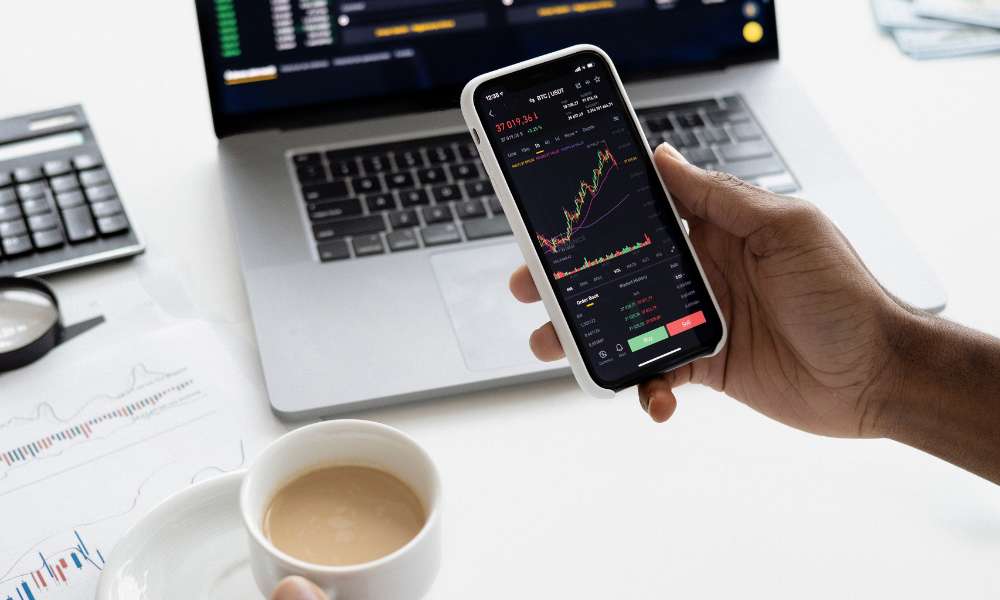
A 2021 report by Chainalysis (The 2021 Geography of Cryptocurrency Report) explains crypto adoption had increased by 880% worldwide. In 2022, Nigeria ranked 11th, and Cameroon at 74th position. For Sub-Saharan Africa, crypto is a rescue. As Adedeji Owonibi, founder of Nigeria-based blockchain consultancy and product studio Convexity puts it:
“We see a lot of daily traders who are trading to make ends meet. We don’t have big, institutional-level traders in Sub-Saharan Africa. The people driving the market here are retail. Nigeria has a ton of highly educated young graduates with high unemployment rates, and no jobs available — crypto to them is a rescue. It’s a way to feed their family and solve their daily financial needs.”
In 2022, the amount of cryptocurrency received by Subsaharan Africa from other regions increased from 97% to 98.3%, with Cameroon being the 13th biggest receiver. Africa crypto usage is at 95% retail transactions, making it a big market zone for P2P trading.
Beyond the need to make ends meet, the growth of crypto usage in Africa is also justified by remittance. Sub-Saharan Africa received over USD 53 billion in 2022. With transaction fees as expensive as 20% for USD1000 in some banks, crypto payments come as a solution since they are considered a cheaper, faster, and easier alternative to cash. The same goes for commerce transactions, with local importers finding it easier and cheaper to buy new materials with crypto.
Note: P2P trading is using FIATs currency (government-issued currency that is not backed by a commodity such as gold) to buy crypto on dedicated platforms like Binance.
How you obtain bitcoins and cryptos: mining and the blockchain
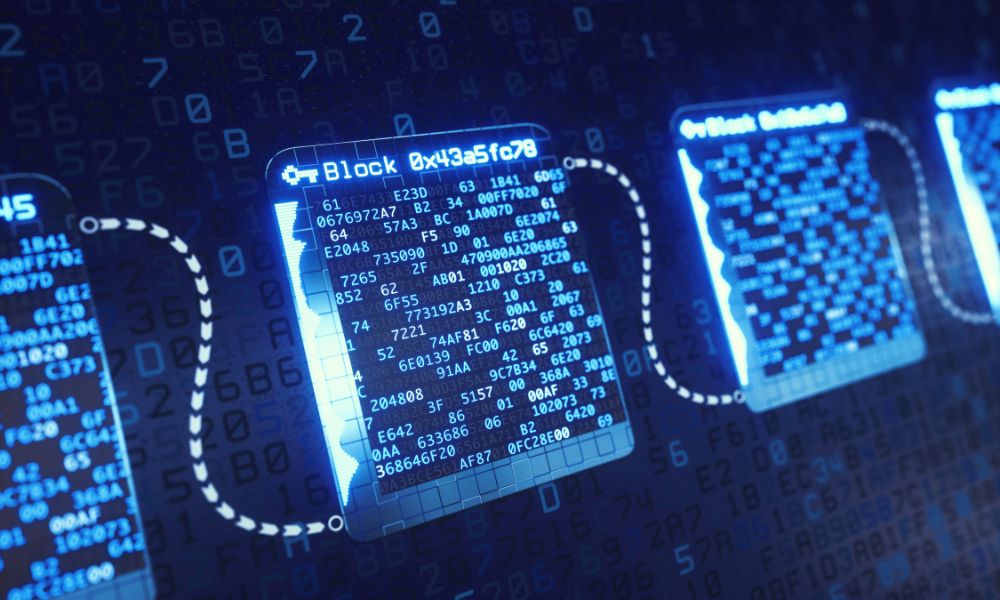
Bitcoins, like all cryptos, are mined. And mining is a complex computer operation that has one node of the peer-to-peer mentioned above (or the blockchain) do a set of calculations, and deliver a result to earn a reward that is crypto. On the network, the node that completes the operation first gets the coin.
The Bitcoin system will allow only 21 million coins to be mined by computers. In 2022, 18.9 million bitcoins were already mined. Following the bitcoin technology, we find that it takes an average of 10 min to create a new block.
A block is a set of transactions ( 2400 transactions for Bitcoin), and each transaction is signed by whoever initiates the transaction. Signing a transaction will require having a private/public key pair. Once all the transactions have been collected into the block by a peer, a hash will have to be produced. Now depending on what crypto we are dealing with, the format of the hash differs. Bitcoins technology requires a variant sequence of zeros on the hash (also known as the difficulty level restrictions). Here is an example below:
0000000000000000fcd876c88129314140586061908fa141fcbc57f1132cc49a
To obtain this hash, each node of the network uses the previous block hash, the list of all recorded transactions, guesses a number called nonce (number only used once), and some other parameters or variables.
Note: The "nonce" in a Bitcoin block is a 32-bit (4-byte) field whose value is adjusted by miners so that the hash of the block will be less than or equal to the current target of the network. The rest of the fields may not be changed, as they have a defined meaning. ~Nonce - Bitcoin Wiki
Once a block is created, its hash is used to create the next one. This sequence of blocks is what we call the BlockChain.
Note: the blockchain is an architecture that cancels the need for a centralized authority in the network. Each node of the network shares the same database of ledgers (blocks) and the system is designed to be immutable, meaning any edition on any given block of the chain renders it corrupted.
Understanding Blockchain Transactions
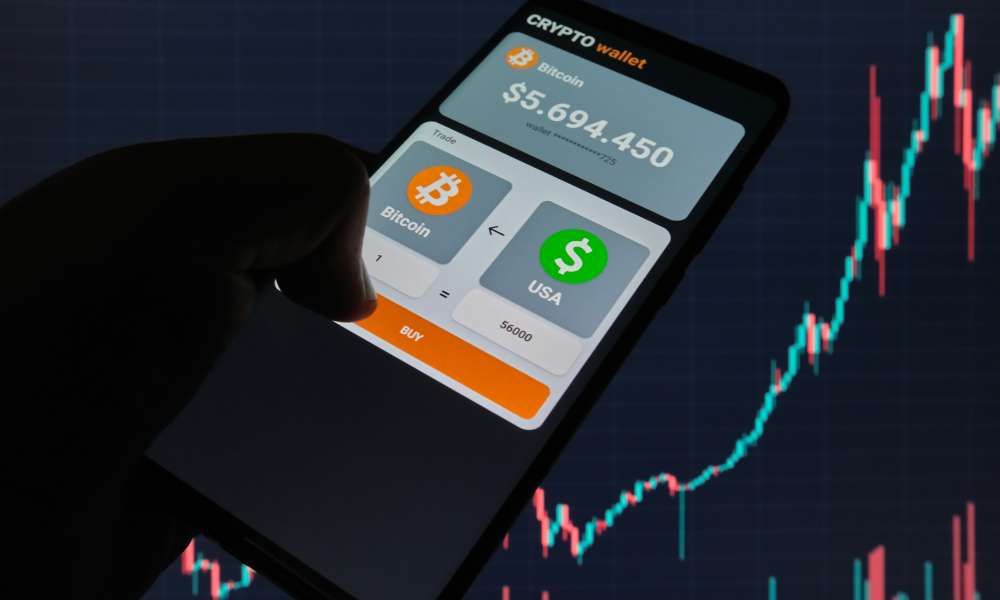
Transactions can be understood as simply as sending some coins to someone else. But this is also how miners earn rewards.
Understanding how transactions work implies an understanding of public/private key pairs, digital signatures, and the above-mentioned mining operation.
In the crypto jargon, we often hear people talking about wallets. Wallets are tightly linked to your public/private key pair. They do not hold any crypto, rather, your public key is used to receive coins while the private key serves in sending.
So when a transaction is initiated, that is someone using his private key to sign the operation, using the public key of the receiver. With that said, you can own as many key pairs as you wish, nothing on the blockchain prohibits it.
Associated with a transaction are fees. For most crypto, there can be no fees. But in an event where all the available stock of coins is used (21 million for bitcoins), fees will serve as rewards for miners. Currently, for basically all crypto, rewards are a number of coins given to the first miner that solves the cryptographic puzzle we mentioned above, which is solving the hash function for the new block. Those mining bitcoins currently get 6.25 bitcoins. This value is cut in half every 4 years.
How crypto produces money
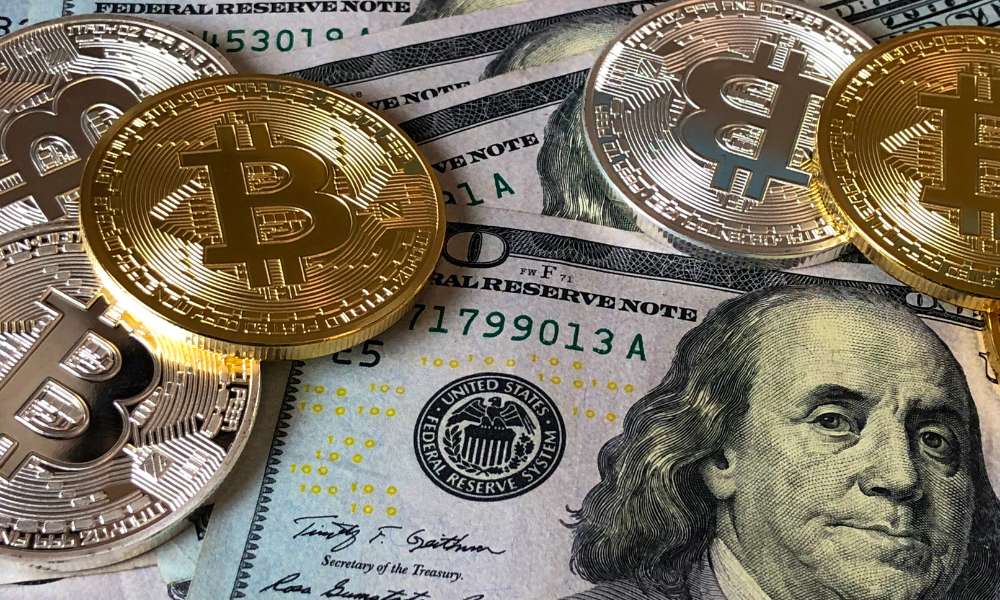
Technically, bitcoins do not produce money. They are only worth what people are willing to invest in them. The current Bitcoin value is USD 16,855.40 (January 2023). Warren Buffet compares bitcoins to gold, qualifying it as a mere mirage more than anything else.
Gold is only given the value we are willing to pay for, it is pretty to look at and cool to have (jewelry). However, industrial applications are limited. You cannot do much with it. Warren Buffet associates the same properties with bitcoin, explaining crypto is heavily reliant on how many people are excited about buying them (with real money) and how much they buy it.
As such, the more crypto is popular, the more its value increases, and the more real-world money is infused into it. Added to this, there is the scarcity factor. Mining Bitcoin for example is very difficult and requires a lot of computer power, and there is only so much you can get ( 21 million). A lot of cryptos use that principle to gain value on the market.
Crypto is currently a $798 billion market. It is a fluctuating market with each year, dozens of new crypto. As of 2022, there were 21,844 cryptocurrencies in existence, with ten more created in the past two months. You can check crypto stats and lists at Mining Pool Stats.
The Cost of Mining
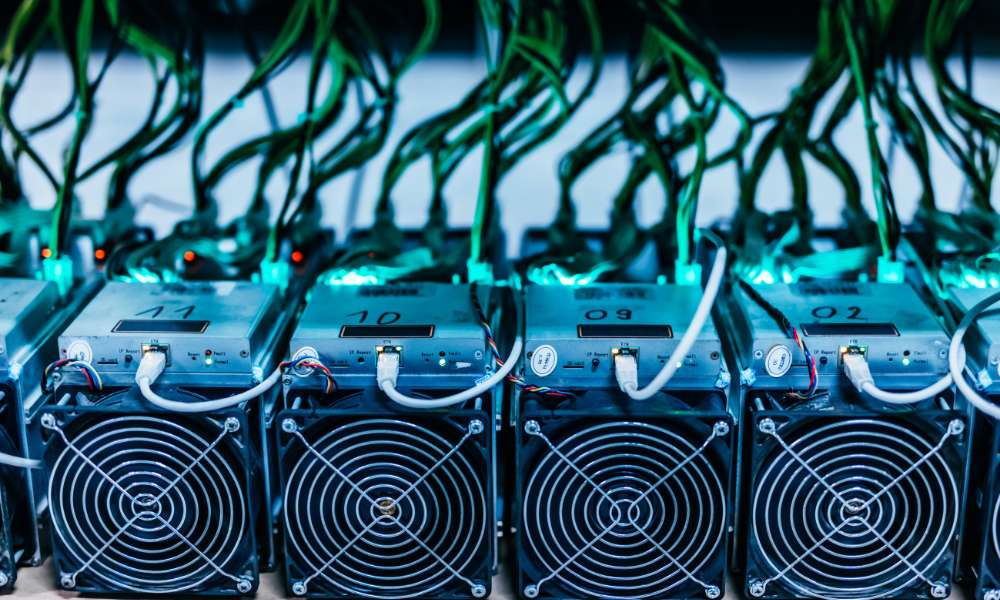
If you have been thinking about starting mine, this section should be of great help. Depending on what cryptocurrency you are interested in, you may end up with very large electricity bills.
First things first, mining requires a computer capable of being the first to complete a block by solving the hash problem. We will study the cost of mining with Ethereum, the second-largest crypto after Bitcoin.
Let’s note that
- 1 ETH is currently valued at USA 1,268.52. Let’s note the following:
- It takes 10-12seconds to create an ETH block
- Miners are rewarded 2ETH for successfully solving the hash function
- Miners receive 100% of the transaction fees
Now to mine, you have two options: join a pool (and pay pool fees and share earnings with the rest of the pool) or go solo (by either investing in larger hardware or renting them on the cloud [cloud ming]). Regardless, your mining rig should have a decent hashing rate measured in KH, MH, GH, and so on. To achieve this, your computer must have:
- A very powerful CPU
- A rather large ram
- One or several GPUs designed for mining (not all GPUs can effectively mine)
- A specialized software some of which are in the table below
Source: Guide On How To Mine Ethereum, Staking, Mining Pools
There are hundreds of options for you on how to mount your mining rig, ranging from a few hundreds US dollars to a few thousand or tens of thousands. However, a good GPU may return USD 2 for each USD1 invested.
Once the investment in equipment has been made, you still have to handle the very high energy bills that will follow. Mining requires a huge amount of electricity since computers are required to be 100% of the time online.
As of Friday, January 06, 2023, it would take 0.000 days to mine 1 Ethereum at the current Ethereum difficulty level along with the mining hash rate and block reward; an Ethereum mining hash rate of 6,000.00 MH/s consuming 4,500.00 watts of power at $0.10 per kWh, and a block reward of 2 ETH. ~ Ethereum Mining Calculator - ETH Mining Calculator - CoinWarz.
All of this is in clear consideration that the ETH rate will not go down and have you lose money. But like any investment, mining is a risky activity.
Note: a mining rig designed to mine Ethereum would not be ideal for mining other cryptocurrencies. ~Ashish Rajendra Kumar Sai
Mobile mining
In recent years, we have heard about mobile mining a lot, especially with speculations over the Pi cryptocurrency. Provided smartphones now are as powerful as computers 10 years ago, mobile mining the new cryptos could be rewarding for most. However, mining is a highly demanding process, and for most phones, this implies significantly reducing their life span.
Some amateur mobile miners use old phones they had laying around in their houses. Connected to the home wifi, using 4 or 5 unused phones could reward you with up to USD 50 per month. In an African context, this is close to being impossible.
Regardless., mobile mining is a cool context but needs a lot more digging and research to figure out how much more achievable this can be for people with reduced access to expensive mining gear.
P2P trading in Africa
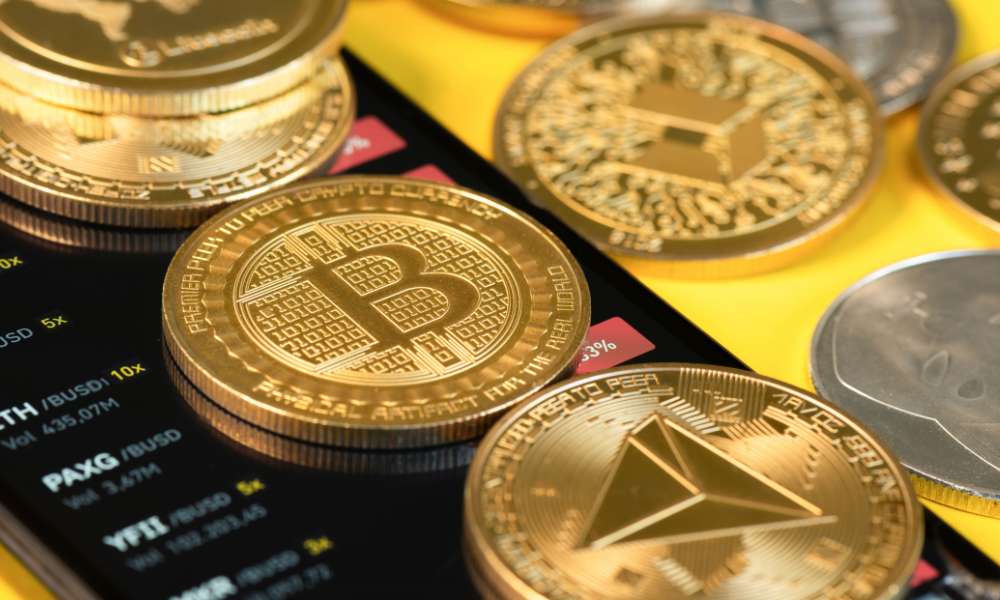
If you do not have enough money to invest in crypto mining, an alternative to having a feel of the crypto world is to trade. And just like investing in publicly traded companies, P2P trading involves buying and selling crypto on dedicated trading platforms like Binance.
This is mostly how the crypto market makes money. You can register on one of the platforms, buy bitcoins, ETH, or Dogecoin, make transactions, trade them for other cryptos or simply resell them to other users for a profit (or in some cases a loss).
P2P trading involves having a wallet, and of course, owning at least one public/private key pair. Globally, P2P trading is the primary way crypto coins are spent, with Africa having the highest rate of transactions under $1000 in the world.
For most trading platforms, there are no transaction fees, but it can take a while before a transaction is confirmed (due to the hash algorithm and other parameters including checking the transaction is not a fraud).
However, P2P trading has been facing huge difficulties in some African countries like Nigeria which in 2021, banned banks from using cryptos to promote the development of a digital currency: the eNaira.
Security issues around cryptocurrencies

When some of us hear about cryptocurrency, we understand scams. And this is undeniably common. In recent years, crypto scams have become regular news headlines. Because crypto transactions are anonymous, they cannot be regulated, leaving room for a wide variety of scams.
Crypto hijacking happens very often when our computers, phones, and other devices are hijacked by attackers and used to mine. If you ever notice your computer's inexplicably slowing down every time you are online, this could be the reason.
For those owning crypto wallets, it is possible to have your private key stolen. Someone having your private key means he can and will transfer all your assets to his wallet. As mentioned before, there is no way to know who got the crypto on the blockchain. As such, not all crypto wallets or P2P platforms are legit.
We have regularly heard of scams involving a new cryptocurrency that would then suddenly vanish with investors' money. The 2021 crypto hack by a South African company saw USD 3.6 billion stolen from investors. In 2019, Uganda’s Dunamiscoin Resources closed suddenly with USD 2.7 million in investor money. Schemes like these are countless throughout the world and curiously always succeed. Some experts put it this way: NEW TECHNOLOGIES, OLD SCAMS.
With cryptos, we now have a greatly flourishing ransomware market. All ransomware now wants to be paid in cryptocurrency. The immediate implication is how impossible it is to trace the hacker through the crypto payment. Another consequence of this is how little action we can make to avoid paying (except backing up your data and investing in expensive recent security solutions)
So far, African governments are still working on regulations to limit the crypto influence on the continent. Nigeria and South Africa are leading with laws and regulations limiting how and when crypto can be used.
Cameroon is yet to release any regulation around crypto. The country has become a very fertile ground for crypto-related scams and schemes, which are the way to often sold as easy ways out of poverty.
The best action remains awareness. Understanding the technology is crucial to any crypto fan. This implies understanding the algorithms and technologies behind the crypto revolution are inherently good and full of potential.
The blockchain is now revolutionizing the whole internet, redefining how applications are built and decentralizing all infrastructures. Web3, a new version of the internet based on the blockchain is a good example of concepts born thanks to the success of networks like bitcoin.
Sources:
2022 Geography of Cryptocurrency - Chainalysis
Cameroon plans a national cryptocurrency regulation
10 Best P2P Crypto Exchanges in January 2023 - Low Fee Sites
Crypto Is Quietly Thriving in Sub-Saharan Africa: Chainalysis Report
https://miningpoolstats.stream/
But how does bitcoin work? (youtube)
Blockchain 101 - A Visual Demo (Youtube)